





Trailborn Grand Canyon Blog
Las Vegas to Grand Canyon Road Trip: Complete Guide
Not every drive deserves to be called a road trip. The route from Las Vegas to the Grand Canyon earns the title. In around 5 hours of driving (more if you take it properly), you move from one of the most artificially lit places on earth to one of its most ancient and humbling landscapes. Much of the route follows Historic Route 66, the original American highway that shaped the mythology of the great American road trip, and the stops along the way are as much a part of the experience as the destination itself.
This guide covers the best route, the Route 66 highlights worth stopping for, and the ideal towns for an overnight stay before arriving at the canyon.
The Route: How to Get from Las Vegas to the Grand Canyon
The most direct route runs approximately 280 miles, heading southeast on US-93 into Arizona, then east along I-40 before turning north on AZ-64 toward the South Rim. It is a straightforward drive on good roads, though straightforward does not mean uninteresting.
The better approach is to leave Las Vegas via US-93, stop at Hoover Dam, and continue into Kingman, Arizona, the gateway to the longest drivable stretch of Historic Route 66. From Kingman, join Route 66 east through Hackberry, Seligman, and Ash Fork before arriving in Williams. This adds time to the journey, but the stops along the way are what make this road trip memorable. Williams sits 60 miles south of the South Rim on AZ-64 and is the natural overnight stop on this route.
First Stop: Hoover Dam and the Mojave
The drive south out of Las Vegas moves quickly from the suburban sprawl of Henderson into the open Mojave Desert. The landscape shifts fast: suddenly it is just rock, scrub, and sky. Hoover Dam is the first stop worth making. The bypass bridge on US-93 offers a striking aerial view of the dam and Lake Mead behind it. Pull over at the viewing area, or allow an hour if you want to visit the dam visitor center and walk across the top. From there, continue east toward Kingman and the beginning of Route 66.
Kingman to Seligman: The Heart of Historic Route 66
Kingman has been a waypoint on the Mother Road since the 1920s, and the history is visible in its diners, signage, and main street. The Historic Route 66 Museum is worth a brief stop before heading east on the highway itself.
The stretch from Kingman through Hackberry and into Seligman is one of the best-preserved sections of the original highway anywhere in the United States. The road narrows, the signage is gloriously retro, and the sense of traveling through living history is genuine. Hackberry General Store is one of the most photogenic spots on the entire highway, and in Seligman the main street diner culture remains very much alive. Stop for lunch before continuing east toward Williams.
For a deeper guide to planning a full Route 66 itinerary through this region, our Route 66 road trip guide covers the full route in detail.
Williams, Arizona: The Gateway Town Worth Staying In
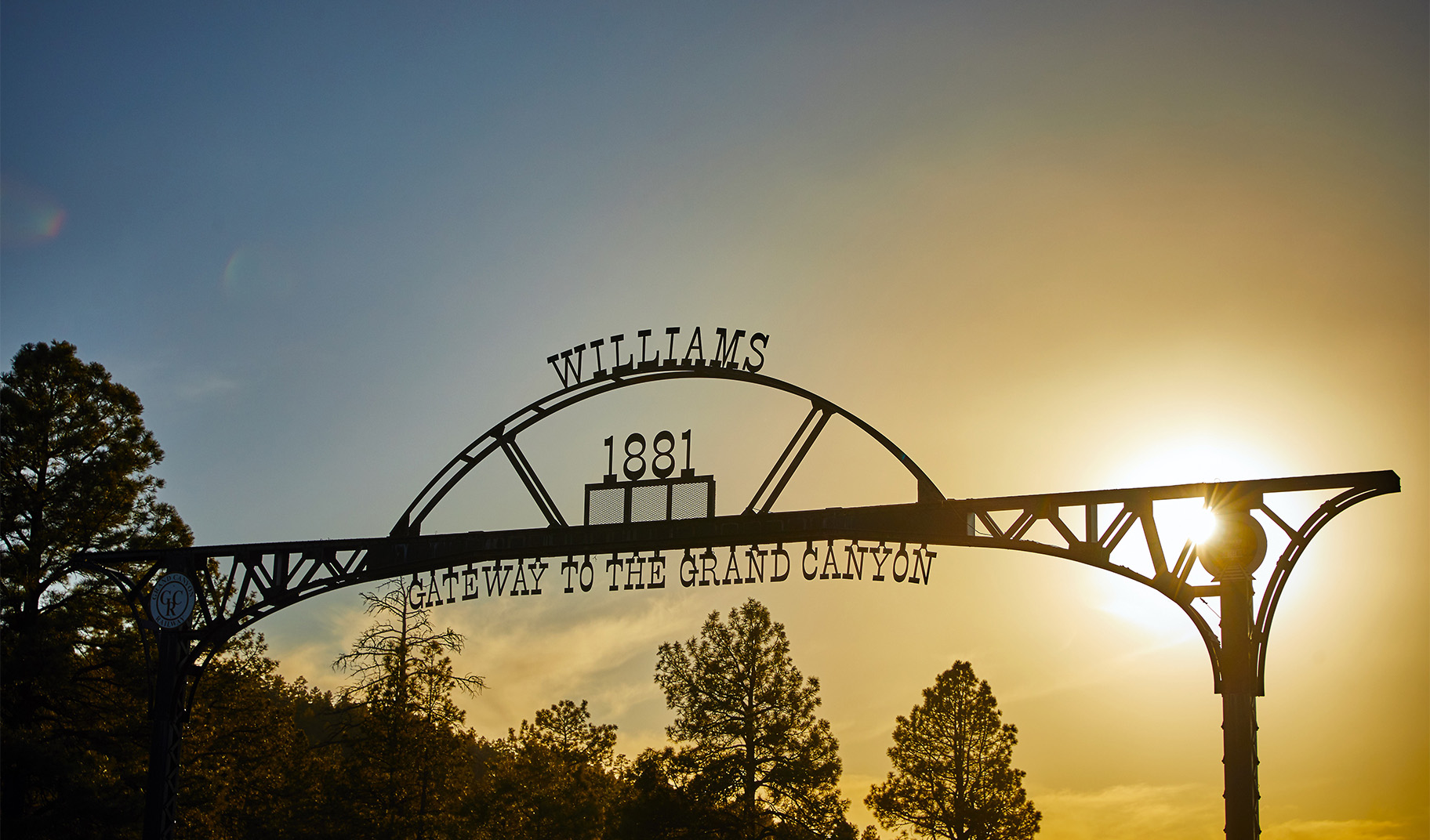
Williams was the last town on Historic Route 66 to be bypassed by Interstate 40, not until 1984, and it has retained the character that many other highway towns lost decades earlier. Sitting at 6,770 feet in the Kaibab National Forest, it is a proper mountain town with a genuine main street, good food, and an outdoor culture that extends well beyond its role as the gateway to the Grand Canyon.
For road trippers on this route, Williams is the natural overnight stop. It breaks the journey at exactly the right point, puts you 60 miles from the South Rim for an early start the next morning, and is interesting enough to reward an evening of exploration. The Route 66 main street has independent restaurants, western bars, and a relaxed energy that feels genuinely earned.
Williams is also the departure point for the Grand Canyon Railway, the historic train that has been running to the South Rim since 1901. Staying in Williams the night before the 9:30am departure makes for a comfortable and unhurried start to the canyon day.
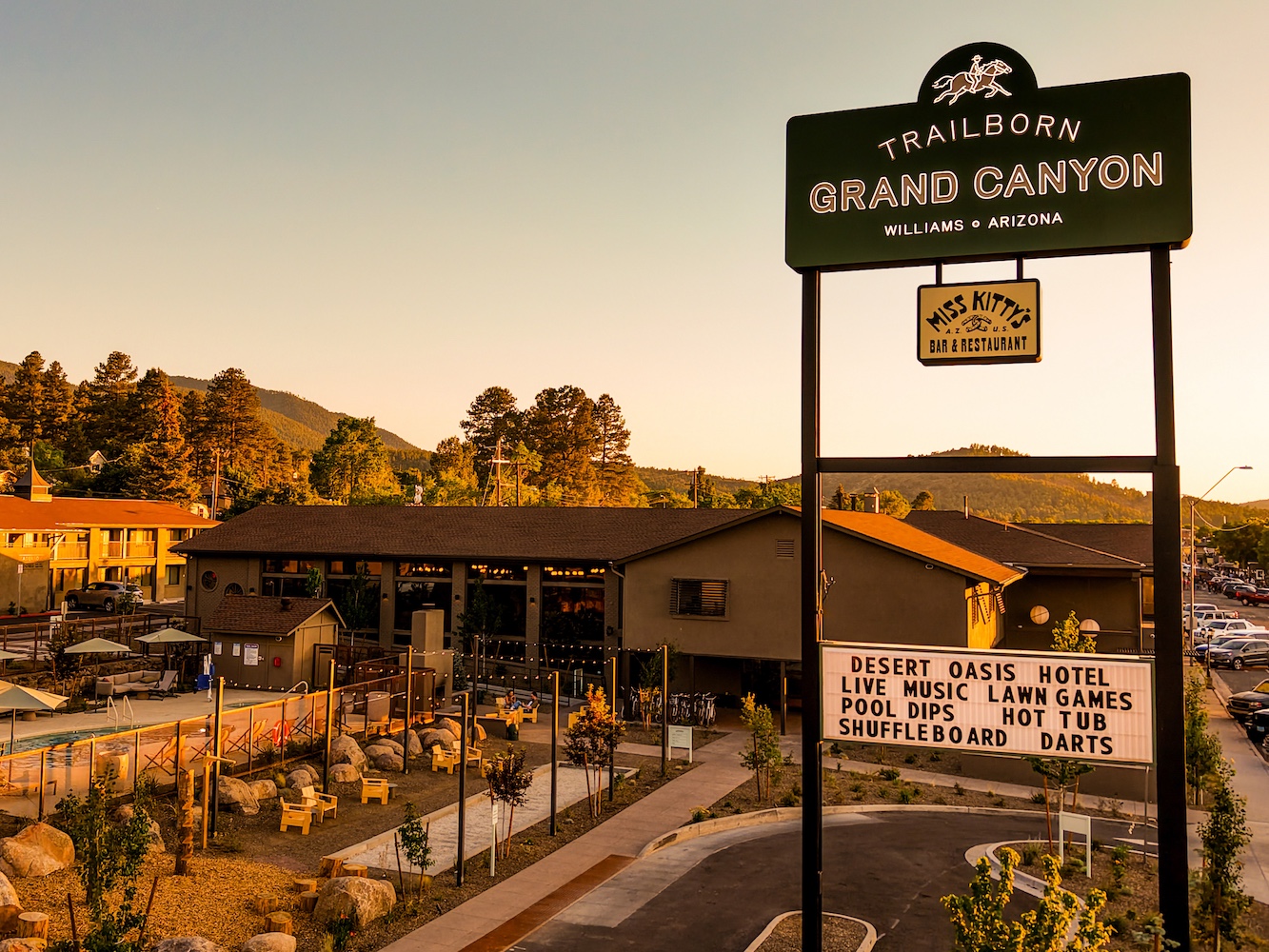
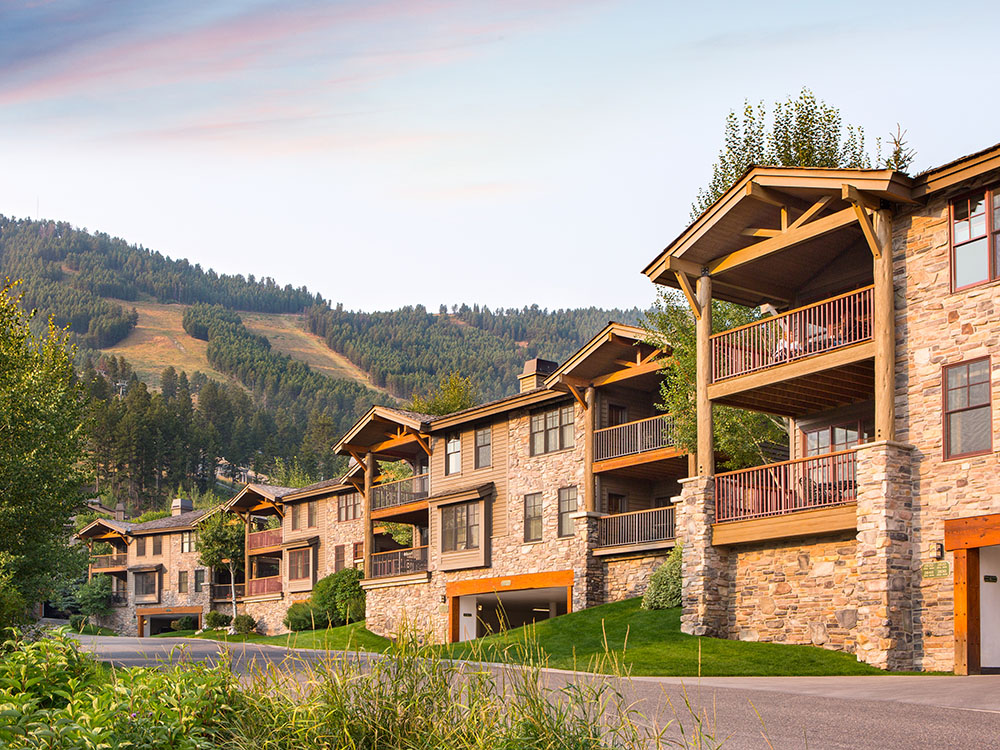
Trailborn Grand Canyon, located in Williams, is well-suited to this kind of trip. Built for travelers who come to explore, whether hikers, road trippers, or outdoor enthusiasts, it provides a comfortable base that sets the canyon experience up well.
Williams to the Grand Canyon South Rim
The final leg is 60 miles north on AZ-64, a straight and scenic drive through open high desert that takes around an hour. Wide grasslands, occasional pronghorn antelope, and a sky that seems to grow larger as you approach the rim.
The South Rim entrance brings you into the Grand Canyon Village area, where the visitor center, main viewpoints, and the Grand Canyon Railway station are all located. Mather Point delivers the first canyon view, and it is as arresting as any photograph suggests. From there, the Rim Trail connects viewpoints east and west, and the free South Rim shuttle extends your range further without moving the car.
Practical Tips for the Drive
Allow two days if you can. Staying overnight in Williams and arriving at the canyon fresh the next morning is a significantly better experience than trying to do everything in one day!
Fill up in Kingman. Fuel stations are sparse once you leave the I-40 corridor and join Route 66. Top up before heading east.
Book Grand Canyon entry in advance. The South Rim requires a timed entry reservation during peak season (May to October). Purchase your pass before leaving Las Vegas.
Start early from Williams. Arriving at the South Rim before 10am avoids the busiest period at the main viewpoints.
Consider the Grand Canyon Railway. Taking the train from Williams eliminates parking stress entirely and adds a memorable dimension to the trip. We highly recommend booking tickets in advance, particularly in peak season.
Making the Most of the Journey
The Las Vegas to Grand Canyon road trip works because it is a sequence of genuinely different experiences: the spectacle of Hoover Dam, the wide-open Mojave, the Route 66 nostalgia of Kingman and Seligman, the mountain-town character of Williams, and then the canyon itself. Each stage has something to offer. Route 66 threads through all of them, and taking the time to follow it is what separates a trip worth remembering from a drive that simply gets you there.
Stay the night in Williams. Walk the main street. Take the train in the morning if the schedule suits. Arrive at the South Rim ready for one of the great natural wonders of the world, and a destination that earns the journey it takes to reach it.